NPM Bulletin – October 2026
Welcome
Welcome to the UK NPM’s October bulletin. As ever, the team has been busy with a wide range of work from consultation responses and finalising the Annual Report, to organising our online conference and engaging with stakeholders.
The Steering Group held its quarterly meeting in London in September, the first to be chaired by our new Chair Rachel Lindsay, and also the first meeting for our new Head of Secretariat Nikki Robinson. It was a productive meeting, and we are grateful to all members for their contributions.
On 9 September, Jane delivered a “Lunch and Learn” session to staff at the Equality and Human Rights Commission on the UK NPM and OPCAT. The session covered the UK NPM’s role and how OPCAT underpins its work. If you would like to learn more about the UK NPM or the OPCAT, you can find the relevant factsheets on our website.
Sarah and Jane attended HMIP’s staff Development Day at the end of September, which included an excellent training session on neurodivergence in prisons and different communications needs delivered by previous Head of Secretariat (then called NPM Coordinator) Louise Finer, alongside Karen Melvin. The training was developed to apply directly to the work of HMIP, providing insight into common communication differences among neurodivergent people and how these may manifest in the prison context. It provided a framework for developing an approach to better respond to the high levels of learning needs and neurodivergent people in prison populations, and generated new thinking about adaptations to their approach that reduce communication barriers through practical scenarios. If any organisations or individuals are interested in finding out more about the training, please let us know so we can connect you with Louise.
The Council of Europe Committee for the Prevention of Torture (CPT) has now published their report on findings from a December 2025 visit to two women’s prisons in England. While good practice is highlighted, the report demonstrates the need for sustained action to improve outcomes for women in detention. Read the full statement on our website.
We are continuing preparation for the second all mandate-holder conference, which is happening in just one month! We are delighted to announce that Dr. Pau Pérez-Sales, United Nations Special Rapporteur on torture, will be opening the conference, followed by a keynote presentation on relational practice delivered by Mick Burns and Kirk Turner. Colleagues from within the UK NPM will also share some insights. If you are a staff member or volunteer from a UK NPM organisation and have not received a registration link, please get in touch.
We encourage you to share this bulletin with your staff, volunteers and any other interested colleagues, so they can stay up to date with the latest NPM news. If you have received this bulletin as a forwarded email and would like to subscribe, you can subscribe here.
With best wishes,
Nikki, Jane, Chelsea and Sarah
The UK NPM Secretariat Team
National Subgroups
Since meeting on 10 September, where guests from Police Scotland and NHS Scotland discussed systemic challenges in providing mental health care to people in police custody, the Scotland Subgroup has continued their post-election engagement with elected officials. Subgroup Chair, Rosemary Agnew, and Chelsea Keenan met with Cabinet Secretary for Health and Care Angela Constance to discuss areas of concern, including access to healthcare in custody, substance use, the aging prison population, the impact of prison overcrowding on health and care, and the need for early intervention on neurodevelopmental conditions.
Since its last meeting on 1 September, the Northern Ireland Subgroup, has written to the Justice Committee for Northern Ireland regarding an impact assessment of the Criminal Justice (Sentencing etc) Bill on the prison population. The Subgroup is also writing to the Departments of Justice and Health regarding the outcomes and agreed priorities of the personality disorder event in June.
Blog: Training for NPMs on the European Commission Recommendation on pre-trial detention and material detention conditions
After attending a Council of Europe training workshop for European NPMs, Jane has written a blog reflecting on some of the key discussions, including what makes a visit preventive; how far NPMs should look beyond conditions inside a place of detention to understand their causes; the role of NPMs’ non-visiting functions, such as advising on legislation and contributing to training; what makes a recommendation capable of producing change; and how annual reports can act as instruments of prevention.
Read the full blog on our website
Recent publications
- Good Practice Paper – Equalities
- Statement – UK NPM Statement on the CPT report: Scotland
- News – Nikki Robinson joins the UK NPM as Head of Secretariat
- Blog – Changing the Narrative: Suicide in detention
- Publication – Quarterly Reporting Dashboard Analysis – Q1 2026/27
- Statement – UK NPM Statement on the CPT report: Treatment of women in prison in England and Wales
Using the Reporting Dashboard
Quarterly Analysis
The quarterly analysis for Q2 2026/27 has been published. This document includes setting-specific overviews of top thematic areas of concern and good practice over the last quarter.
Did you know every record tells you who needs to act?
Repeated recommendations are a key feature of the UK’s deprivation of liberty landscape. In its last Annual Report, the UK NPM noted that the same systemic problems keep recurring time and time again.
While the Reporting Dashboard lets you see the historical record of recommendations made by UK NPM bodies, it also shows who each recommendation is aimed at. After filtering your search as you wish, click into a record to find its Recommendation Target, which may be local leadership, national leadership or government. This feature can help you spot where an issue may have been raised at one level without change, and may then inform new recommendations that are aimed at a different target for better results.
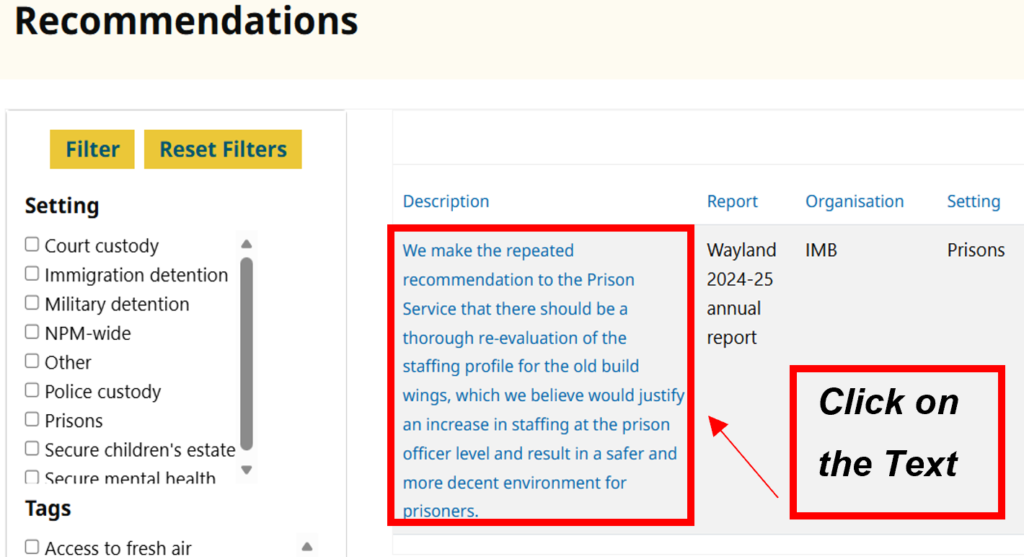
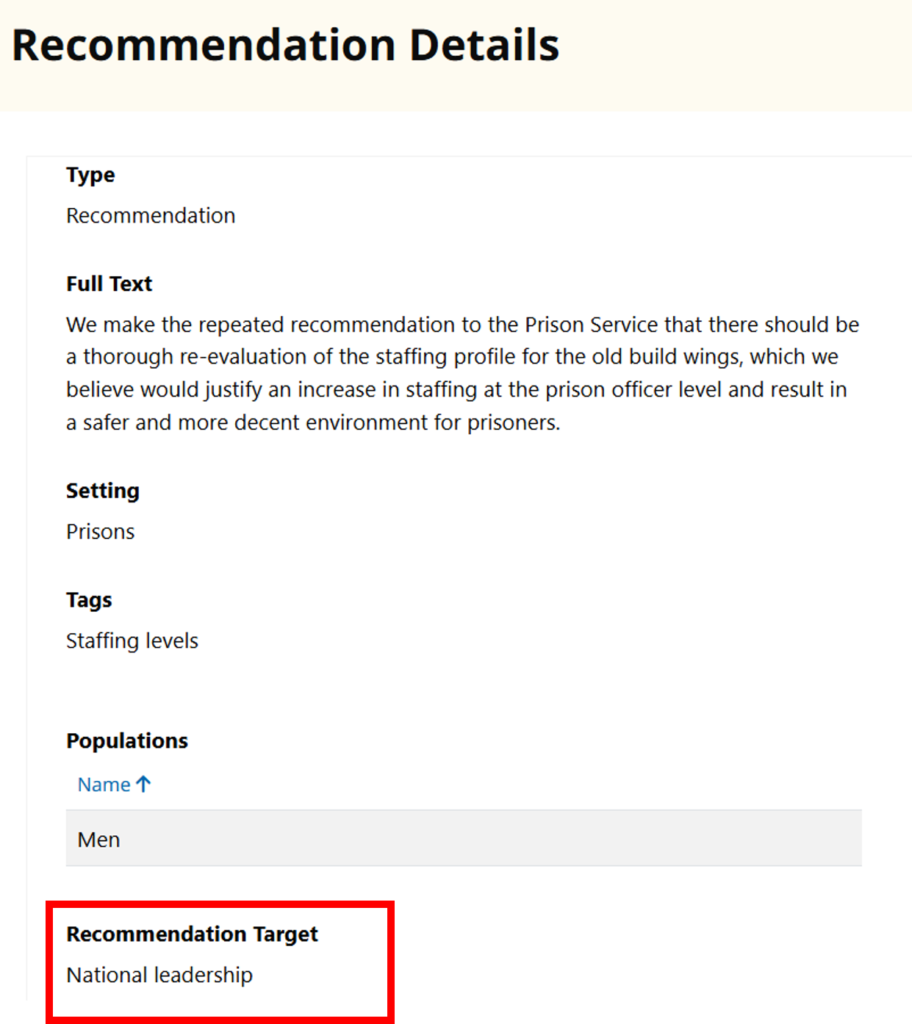
For anyone who would like to learn more, you can watch this instructional video, which walks you through some examples of how to use the Reporting Dashboard.
Please let us know how you are using the dashboard by sending us an email.
Good Practice: Mental Health
In recognition of Mental Health Day, which took place on 10 October, we would like to reshare our Good Practice Paper on mental health, previously circulated in May. The paper draws on examples from April 2025 to March 2026, and examines how deprivation of liberty settings are strengthening mental healthcare through practical action. The findings? Early identification, coordinated support and low-threshold options that people can access before distress escalates are all contributing to enhanced care for those suffering mental ill health in detention.
Spotlight reports from NPM bodies
HM Inspectorate of Prisons – Children in Custody 2025-26
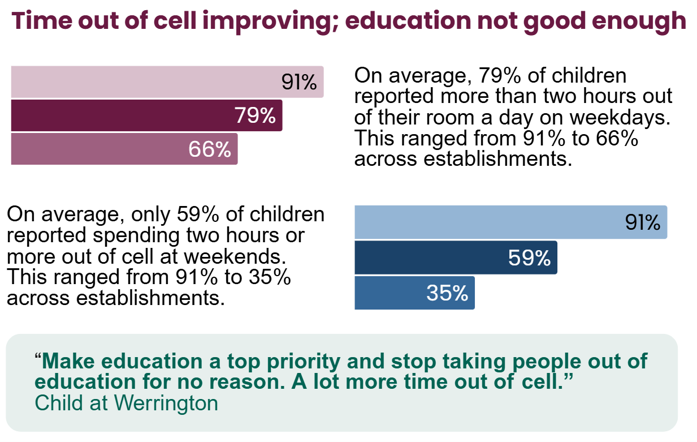
HMIP’s latest review of survey responses from children in custody has found that standards across the youth estate remain generally poor, with violence continuing to blight children’s lives, too many spending long periods locked in their cells and inadequate education provision. Children described an unpredictable environment in which fights, group assaults and the carrying of weapons were common. Many said staff did not do enough to keep them safe and only 26% said they would report bullying or victimisation by other young people.
Read here: Children in Custody 2025-26
Healthcare Inspectorate Wales – Annual Report 2025-26
HIW’s Annual Report, while recognising the dedication and compassion shown by staff, stresses the need for faster and more sustainable improvements to ensure patients experience meaningful, lasting change. The report notes that mental health and learning disability services across Wales continue to face significant and sustained pressures, and remain one of the most complex and high-risk areas HIW inspect and regulate. Such services require strong leadership, safe environments, a skilled workforce and a continued focus on improvement across the whole system.
Read here: Annual Report 2025-26
Latest news from NPM bodies
- CJI have engaged with many important external colleagues, including: Russell Underwood (Assistant Chief Inspector, Office of the Inspectorate, New Zealand’s Department of Corrections); Aongus Kelly, the newly appointed Human Rights Advisor to the Northern Ireland Policing Board; and delegates from the Kenyan Independent Police Oversight Delegation.
- HIW has published its Annual Report for 2025-26, highlighting ongoing challenges affective healthcare services across Wales, including access to care, patient flow, workforce pressures and the suitability of some healthcare environments.
- HMIP has published several inspection reports, as well as its annual report on Children in Custody.
- HMIPS has published six reports on court custody inspections across Scotland. HMIPS also held an event on Volunteer Monitoring in Prisons: Evidence, Independence and Impact – attended by NPM Secretariat Officer Chelsea Keenan.
- ICVA has published a blogwhich shares the story behind its new E-learning platform, which now has over 900 users, with ICVs having completed more than 2,700 courses!
- ICVA has also published a briefing on Virtual Remand Hearings (VRHs) and the arrangements for those who are remanded by remain in police custody awaiting transfer to prison. The briefing highlights some key issues for ICVs to consider when monitoring the care of remanded prisoners, and some additional considerations for those who may spend longer periods in police custody following a VRH.
- IMB has published several annual monitoring reports, including the first report on HMP Millsike. In January 2026, the IMB at Millsike raised concerns around the conditions since the prison opened in March 2025. The first annual report still highlights concerns, but also reports that many problems have been tackled or are in the process of being addressed.
- MWCS has published several local inspection reports.
- Ofsted has published an inspection report on Clayfields House Secure Unit, Lansdowne Secure Unit, Kyloe House, Swanwick Lodge, Vinney Green Secure Unit and Oakhill Secure Training Centre.
If we missed anything, or if you have a report, blog post or news story you would like to share in the next bulletin, please send us an email.
Upcoming events and activities
13 November: All Mandate-Holder Conference 2026
External resources of interest
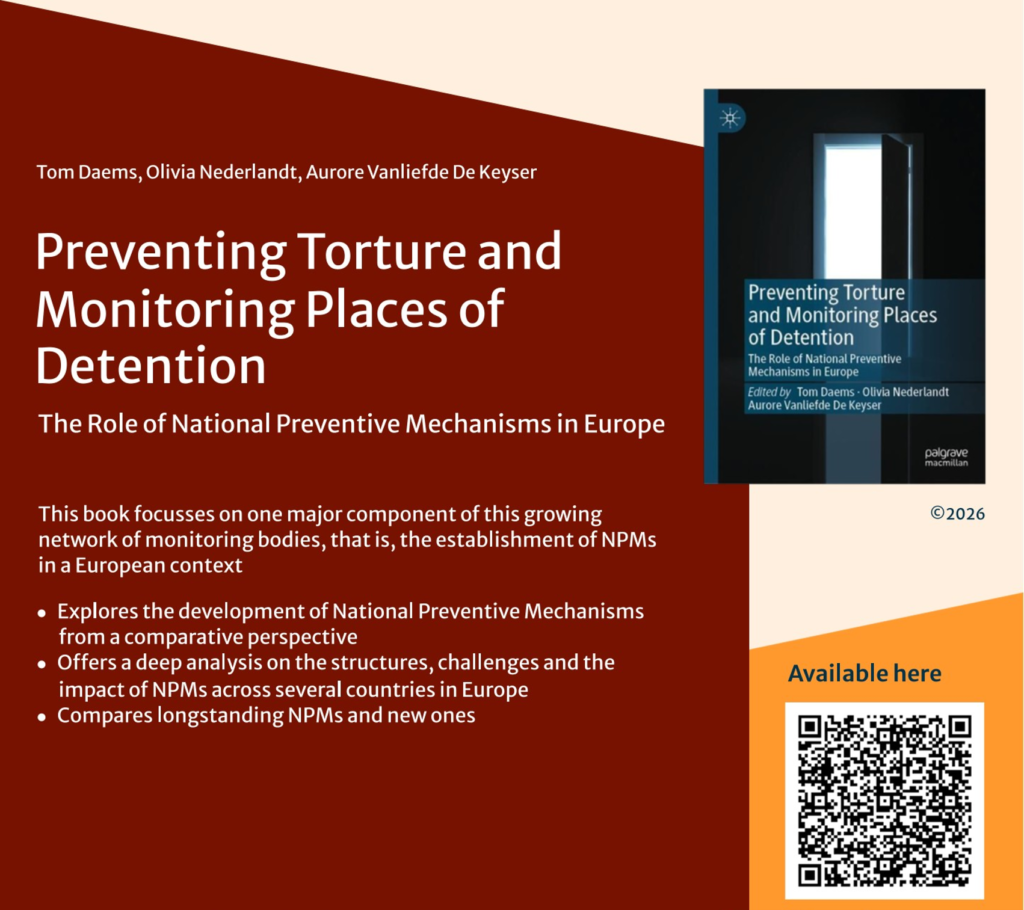
Preventing Torture and Monitoring Places of Detention: The Role of National Preventive Mechanisms is a collection of accounts from NPMs across Europe, reflecting on ratifying OPCAT as well as the establishment and functioning of the NPMs. The UK NPM’s very own Sarah Rennie, alongside previous Head of Secretariat Sam Gluckstein, contributed to the chapter on the UK NPM!
DIGNITY has published a new Practical Manual on Prison Monitoring, providing monitors with tools to identify and prevent risks of torture and other ill-treatment.
A new publication from the Association for the Prevention of Torture documents current practices that are protecting the rights of LGBTQ+ people in places of detention.
Resources and the Justice System, a new report from the Institute for Fiscal Studies, reviews the pressures and challenges facing the UK justice system.
The Institute for Government has published Performance Trackers for Prisons and Probation and Criminal Courts.
Thank you for reading!
This bulletin is compiled each month by the NPM Secretariat. If you have any news you would like to share, or would like to provide feedback, please get in touch via email or LinkedIn.