NPM Bulletin – March 2026
Welcome
Welcome to the UK NPM’s March bulletin. With the days now lasting a little longer, we hope that you’ve caught the brief sunshine we’ve been getting!
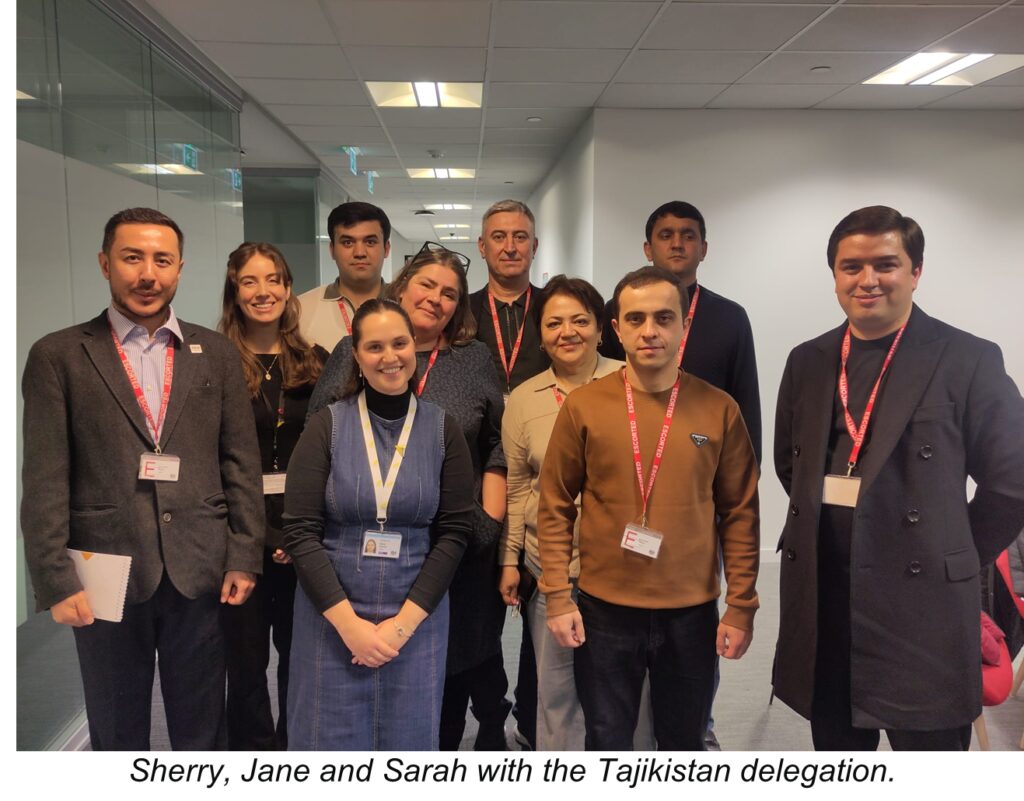
UK NPM Chair Sherry Ralph, together with Jane and Sarah, recently met with a delegation from Tajikistan. The delegates were keen to learn more about the UK’s police custody arrangements as they work to support the transformation of police investigation practices in Tajikistan. The UK NPM values these opportunities for international collaboration, which not only allow us to share lessons from our own work but also to learn from the perspectives of others.
The team continues to work on a number of projects, and is also finalising the plans for the upcoming UK NPM Annual Conference, taking place at the end of April. We hope to share a final agenda very soon. As ever at this time of year, the team is concluding and reflecting on the year’s work while preparing to launch the priorities set out in the new Business Plan – a fitting way to round off a busy and productive period!
We encourage you to share this bulletin with your staff, volunteers and any other interested colleagues, so they can stay up to date with the latest NPM news. If you have received this bulletin as a forwarded email and would like to subscribe, you can subscribe here.
With best wishes,
Martin, Jane, Chelsea and Sarah
The UK NPM Secretariat Team
National Subgroups
After a year-and-a-half of valued leadership, Prof Angela O’Hagan has stepped down as Chair of the NPM Scotland Subgroup. The Subgroup is grateful for Angela’s contributions, including strengthening connections with parliament, driving a deeper focus on human rights, and leading important conversations in the NPM around deprivation of liberty in health and social care. Rosemary Agnew, Commissioner at the Scottish Human Rights Commission, has taken up the Chair. Rosemary brings a wealth of public sector experience including as Scottish Public Services Ombudsperson and Scottish Information Commissioner. We look forward to working with Rosemary.
On Friday 6 March, the Scotland Subgroup held the roundtable discussion Behind Closed Doors: the state of detention in Scotland. Audrey Nicoll, MSP and Convenor of the Criminal Justice Committee Chaired a panel of speakers from within the UK NPM, including Sara Snell (HM Chief Inspector of Prisons for Scotland), Ray Jones (HMICS), Cathy Asante (SHRC), and our very own Chelsea Keenan from the Secretariat team, as well as a panel of expert contributors who brought insights from scrutiny, government, NGOs and lived experience. It was a thoughtful conversation that surfaced many complex issues around conditions and treatment in Scottish detention settings, and we thank all those who attended for their insights. A report on the main themes emerging from the meeting will be published soon, and the Scotland Subgroup will meet on 12 March to discuss next steps.
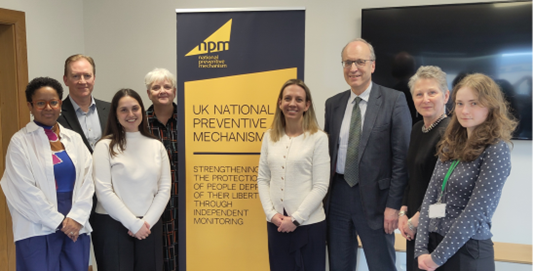
The Northern Ireland Subgroup met on 10 March. In one of her final contributions to the group before retirement, Maureen Erne (CJI) delivered a presentation on data relating to serious adverse incidents in prisons, and thematic options for the Subgroup to pursue. Thank you Maureen for all your work with the NPM! The group looks forward to gathering comparable information from other deprivation of liberty settings over the coming months. The group was also pleased to welcome Margaux Bottin, who has recently joined the UK NPM as an intern. Margaux is undertaking research into the differing legislative frameworks across the UK for foreign national offenders held beyond tariff. Her work will provide much‑needed clarity on a complex and often overlooked area, and the group is grateful for the insight she is bringing to this project.
News Article: International Women’s Day 2026
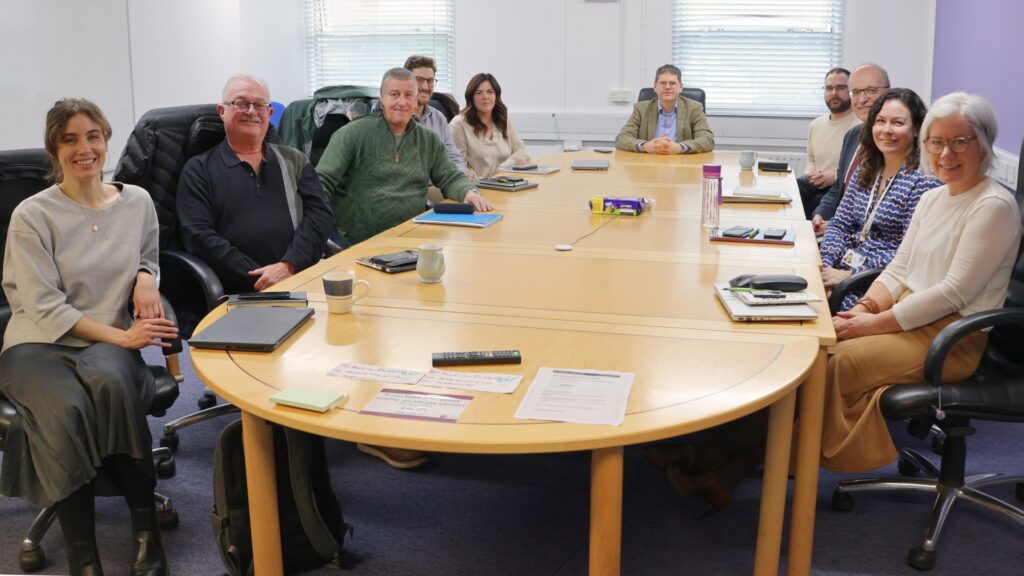
In recognition of International Women’s Day 2026, we are pleased to share Eline De Sagher’s thesis, A system by men, for men: A human rights perspective on women’s imprisonment in the UK, submitted as part of her Human Rights LLM at the University of Edinburgh.
Eline, who worked with the UK NPM Secretariat Team in 2025 while completing her degree, has examined how far UK inspection frameworks respond to the needs of women in prison and whether the frameworks align with international human rights expectations.
Jane has written a complementary article, A human rights perspective on women’s imprisonment in the UK, to commemorate International Women’s Day, and also to share Eline’s thesis, both of which can be found on our website.
Using the Reporting Dashboard
Did you know you can use the Reporting Dashboard to track repeated recommendations?
When preparing for November’s Scotland Subgroup meeting, Sarah used the Reporting Dashboard to examine recurring recommendations relating to deaths in detention in Scotland. By filtering the recommendations by nation and tag, within seconds a full five-year picture of what NPM bodies have said on this issue was available. After exporting this data to Excel, the repeated recommendations clearly stood out: the SHRC had raised the same concern in 2020 and 2024, and HMIPS had consistently called for a new approach to curbing drug use in prisons year after year. This kind of targeted filtering allows users to quickly build an evidence‑based picture of repeated themes, and allows the UK NPM to maintain a strong organisational memory of issues that continue to surface over time.

For anyone who would like to learn more, you can watch this instructional video, which walks you through some examples of how to use the Reporting Dashboard.
Please let us know how you are using the Dashboard by sending us an email.
Good Practice: Data
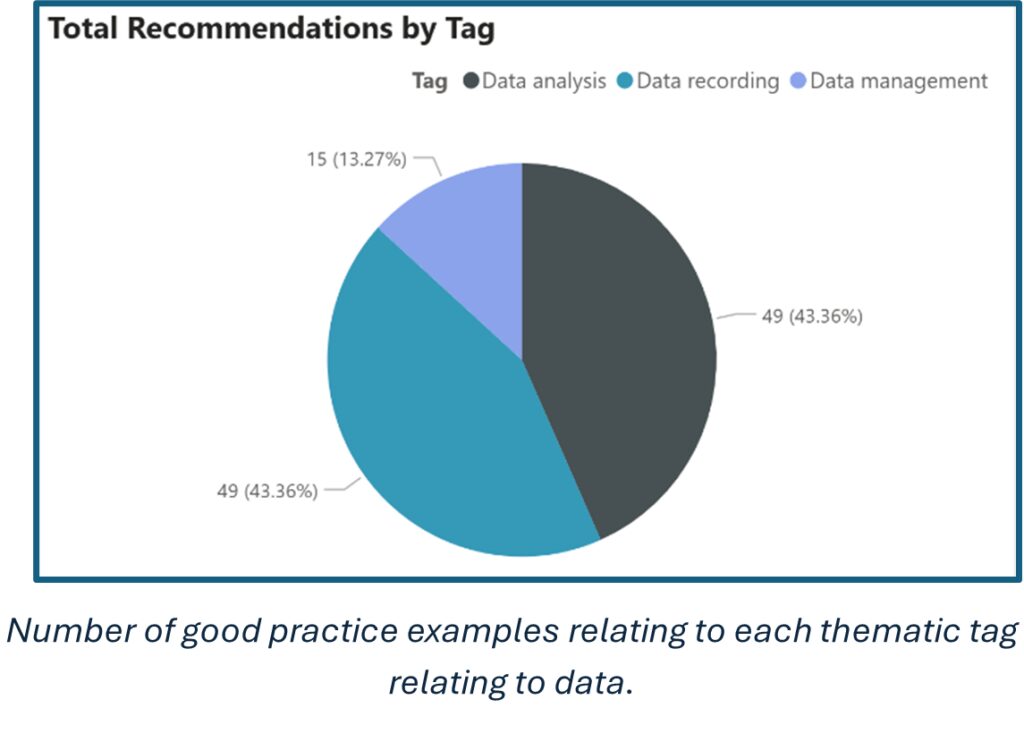
This month’s good practice thematic paper focuses on data, and the three ways it appears across the Reporting Dashboard: data analysis, data recording and data management.
While NPM bodies frequently highlight poor‑quality or inconsistent data in places of detention, the paper brings together positive examples of effective data processes, and how this can strengthen safeguards, support more equitable practice and improve access to information for all.
Spotlight reports from NPM bodies
Lay Observers – Annual Report 2024-25
The Lay Observers’ Annual Report highlights some welcome improvements, including the introduction of dedicated accommodation for children in 20 courts. However, ongoing systemic failures means that progress remains limited due to deep‑rooted and persistent challenges that place detainees at risk.
Read here: Annual Report 2024-25
HM Inspectorate of Prisons in Scotland – Annual Report 2024-25
HM Inspectorate of Prisons in Scotland has published its Annual Report, highlighting serious concerns including severe overcrowding, record high deaths in custody, an increasingly complex prisoner population and transport failures leading to cancelled healthcare appointments.
Read here: Annual Report 2024-25
Latest news from NPM bodies
- People News:
- The IMB are delighted to share that Jane Leech, MBE, has been appointed as the interim National Chair of the IMB. With years of dedicated service and deep experience across the IMB landscape, Jane brings exceptional insight, leadership, and commitment to the role. “Having previously been part of the IMB for 18 years, I feel privileged to return in this capacity, bringing my experience to work alongside such dedicated members, all with the shared focus of improving conditions for prisoners and detained people.” – National Chair of the IMB, Jane Leech, OBE.
- CJI have published a new report on Child Criminal Exploitation in Northern Ireland, which finds that criminal justice organisations do not yet have specific policies and procedures saying how they will tackle child criminal exploitation, and that staff awareness on the issue was not good enough.
- CQC has published its annual report: Monitoring the Mental Health Act. While the report revealed worrying reoccurring issues of staff shortages, a lack of beds, and inconsistencies in experiences, it also highlighted the positive impact of hard-working, caring, and compassionate staff.
- HIW would like to thank everyone who took part in their Strategy 2026–2030 consultation: “Over a 12-week period, we invited patients, carers, healthcare professionals, members of the public, and stakeholders from across Wales to share their views and experiences: Listening to Wales: What You Told Us in Our Strategy Consultation”
- HIW is also inviting healthcare professionals from across Wales to apply for a range of Peer Reviewer roles to support our inspection and review work: Join us – New Peer Reviewer Vacancies Now Open
- HMIP has published several inspection reports, including an inspection of the first removal flight under the UK/France ‘one-in, one-out’ deal.
- HMIP has also published a thematic report on prisoner property, which reveals that too few prisoners receive their property within the first few days of arriving in jail, leaving many unable to access important items such as clothing, shoes, books and photographs.
- ICVA has shared a blog post about Minister for Policing and Crime, Sarah Jones’ commitment to updating the Independent Custody Visiting’s Code of Practice and ICVA’s role within that.
- ICVA is also currently exploring the use of electronic monitoring/reporting tools to support independent custody visiting oversight work and is interested to learn from other NPM bodies that have implemented digital systems. ICVA is particularly keen to understand how organisations are approaching information security, data protection, and secure storage when using electronic tools in places of detention. If your organisation uses electronic tools for inspection reporting, monitoring visits, evidence collection, data management, or related functions, please contact the team at info@icva.org.uk for an informal discussion on approaches, challenges, and good practice.
- IMB has also published several annual monitoring reports.
- MWCS has published a visit report from Rohallion Clinic, and a National Overview Report of all four children and young people’s inpatient mental health units in Scotland, finding areas of good practice as well as areas for improvement, including around rights awareness and use of restraint.
- Ofsted has published inspection reports on Barton Moss Secure Care Centre, Kyloe House, Clayfields House Secure Unit, Aycliffe Secure Centre, Clare Lodge, Atkinson Unit and Adel Beck.
- SHRC in February intervened in a judicial review brought by For Women Scotland against Scottish Ministers on the Management of Transgender People in Custody.
If we missed anything, or if you have a report, blog post or news story you would like to share in the next bulletin, please send us an email.
Upcoming events and activities
12 March: Scotland Subgroup meeting
29 – 30 April 2026: UK NPM Annual Conference 2026, Manchester
External resources of interest
The Scottish Criminal Justice Committee’s Inquiry into the harm caused by substance misuse in Scottish Prisons has published its final report, finding that workforce pressures, resource constraints and severe overcrowding are exacerbating issues related to substance misuse in Scotland’s prisons. Further, the Independent Commission on Sentencing and Penal Policy Commission published its report Justice that Works after examining how Scotland can achieve a sustainable prison population. The report highlights that Scotland consistently has one of the highest prison population rates in Western Europe and without significant reform, the current justice system is neither sustainable nor effective.
The Justice System Roundtable Summary Report outlines the impact of the pandemic on the justice system, prison system and immigration and asylum system, and includes contributions made by UK NPM Chair Sherry Ralph during the session.
The National Police Chiefs Council guidance on Preventing Suicides in and Following Police Custody in England and Wales notes that while suicides within police custody are rare, the number of post‑custody suicides remains high. It stresses that the custody experience can heighten risks for vulnerable individuals. Thanks to ICVA for sharing this resource.
The Prison Reform Trust’s flagship annual publication, the Bromley Briefings notes that the prison capacity crisis in England and Wales is impacting all aspects of prison performance, with indicators on safety, use of force, purposeful activity and overcrowding all deteriorating significantly in the past two years
The UK government has published a paper on reform of the Youth Justice Board for England and Wales: A Modern Youth Justice Service: Foundations Fit for The Future. Thanks to Ofsted for sharing this resource.
Following Hashem Abedi’s attack on prison officers in the separation centre at HMP Frankland, Jonathan Hall (IRTL) was commissioned to conduct an independent review into separation centres in prisons. The review recommends greater simplicity and flexibility of separation centres, more focus on data collection and use, and greater support for staff to identify and manage risk.
Thank you for reading!
This bulletin is compiled each month by the NPM Central Team. If you have any news you would like to share, or would like to provide feedback, please get in touch.