Blog: UK NPM Annual Conference 2026
On 29 and 30 April 2026, delegates from the UK NPM’s organisations met in Manchester at the Annual Conference. This year’s conference theme was mental health, reflecting the scale and urgency of the challenges being felt in this area across all deprivation of liberty settings.
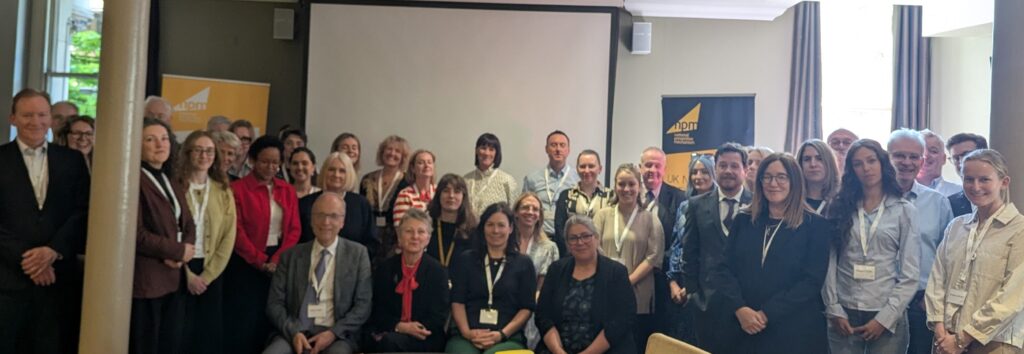
A consistent message emerged throughout: improving outcomes in mental health is a system-wide issue that cuts across settings, professions and legal frameworks, and requires coordinated action and sustained scrutiny.
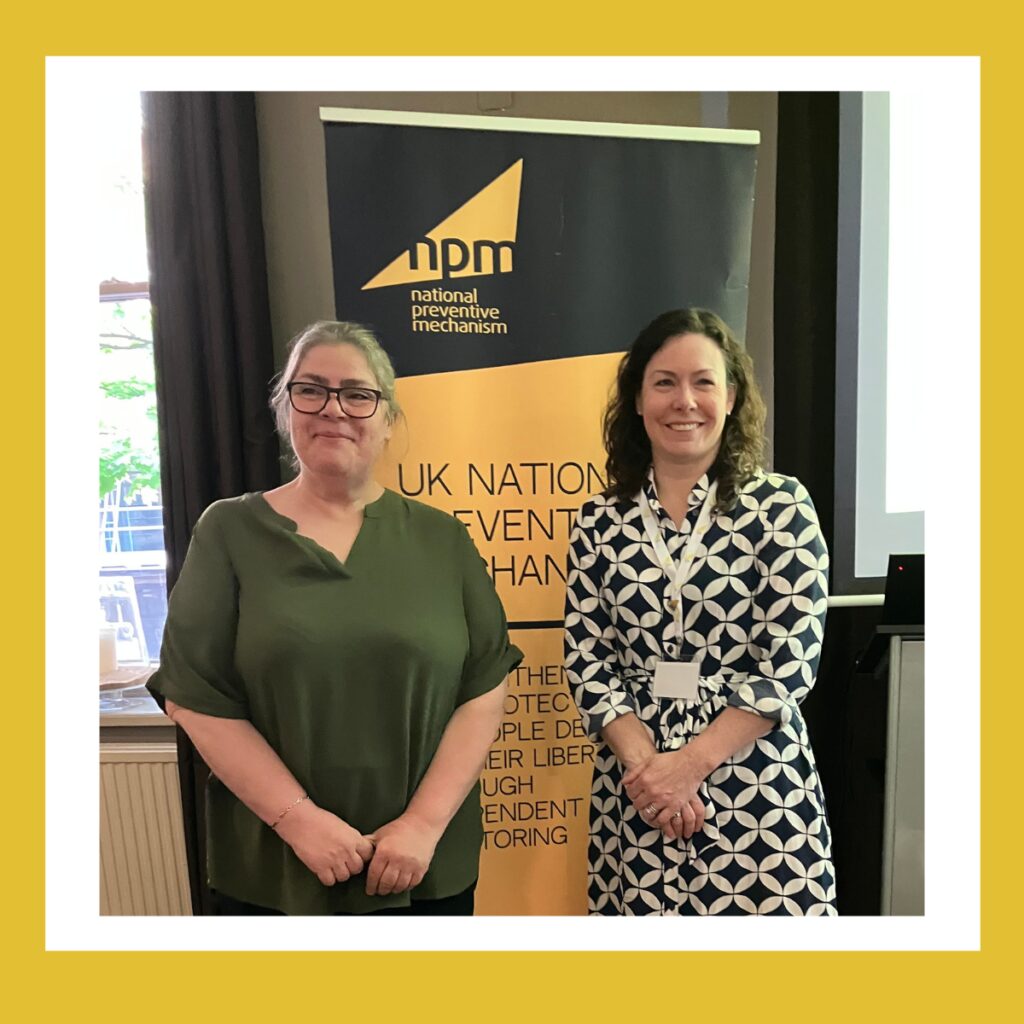
This year’s conference also marked the end of Sherry Ralph’s tenure as Chair of the UK NPM and the formal introduction of Rachel Lindsay as incoming Chair. The UK NPM Secretariat Team is hugely grateful to Sherry for her expertise and direction during her time as Chair, and is delighted to welcome Rachel to this role, as someone who has already made a major contribution to the NPM, including leading the Northern Ireland Subgroup. You can see what Sherry and Rachel had to say below.
Business Plan 2026/27
Outgoing Chair Sherry Ralph opened the conference by acknowledging the breadth of expertise the UK NPM brings together and the sustained pressure settings of deprivation of liberty continue to face across the UK.
Interim Head of Secretariat Martin Kettle presented the UK NPM’s Business Plan for 2026/27. This builds on key achievements from last year. The Secretariat Team shared updates on the Self-Evaluation and Peer Review project, ongoing thematic work on solitary confinement, developments to the UK NPM’s Reporting Dashboard, and the 2026/27 Communications Plan.
Keynote and International Perspectives
Dr Alan Mitchell, President of the Council of Europe’s Committee for the Prevention of Torture (CPT), delivered the keynote address, reflecting on the CPT’s preventive function and its 37 years of monitoring across Europe. Considering the UK context, Dr Mitchell highlighted concerns about inappropriate placements for those with poor mental health, where they should instead be in hospitals, and noted persistent gaps in implementation and delays in mental health care in the UK.
An international panel brought perspectives from NPM colleagues from Switzerland, Austria, and Norway. The panel explored how deprivation of liberty is identified in care homes and the need to apply clear human rights standards in these environments. Discussion also surfaced the common frustration of repeated recommendations amid deeper structural drivers of poor conditions, as well as strengthening monitoring teams through multidisciplinary expertise, including practitioners and people with lived experience, and using thematic reporting to build sustained attention and leverage.
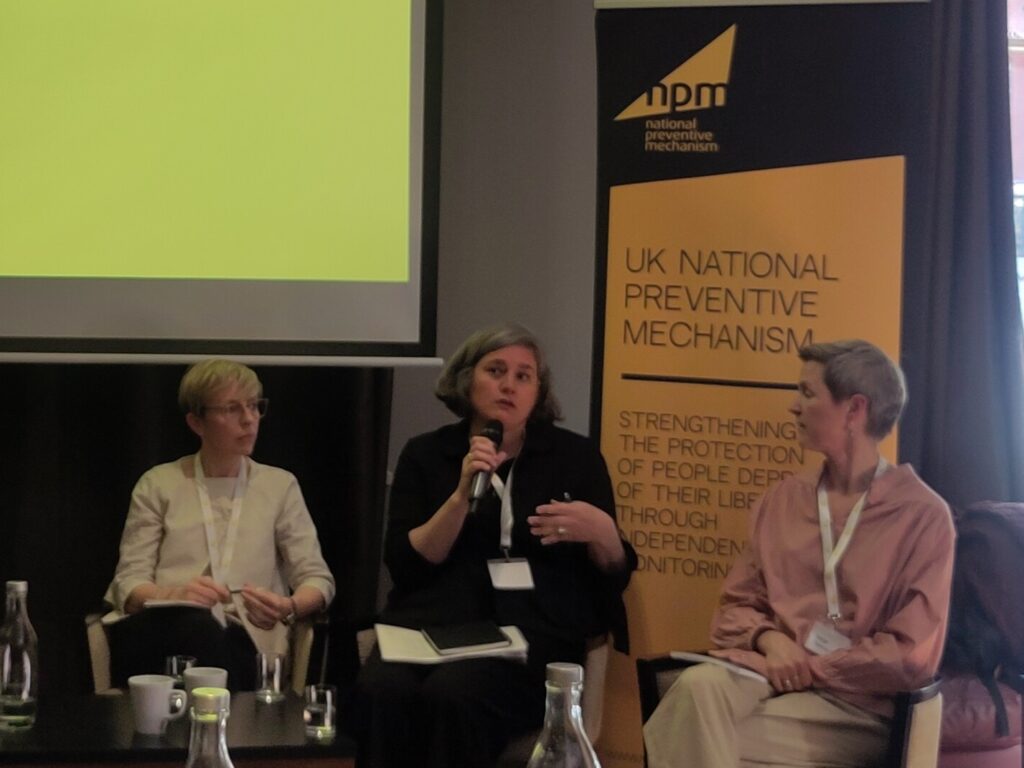
Mental Health: Settings, Support, and Scrutiny
Shaun Thomson (Inspector, HMIP) highlighted that acutely unwell individuals are being remanded to prison during mental health crises, with transfers to hospitals routinely breaching the 28‑day guideline, in some cases exceeding 500 days. David Whalley (National Chair, Lay Observers) noted similar pressures in court custody, where increasing numbers of detainees have mental health needs. While Greater Manchester Police reported progress – having not authorised a solely Section 136 detention[1] for three years and instead pushing for clinical attendance and NHS‑led assessments – significant systemic gaps remain, particularly regarding access to doctors and appropriate places of safety. These challenges are exacerbated by severe pressures on mental health services, with England’s 25,000 mental health beds consistently operating at around 91% capacity as noted by Kim Forrester (Director of Mental Health, CQC).
A therapeutic approach offered a note of hope. The Head of Clinical Services at HMP Grendon described a culture where relationships and community are central. The message was clear: aligning an establishment’s goals with what its residents value – like safety and connection – helps people engage and improves outcomes.
Successes in Inspection and Monitoring
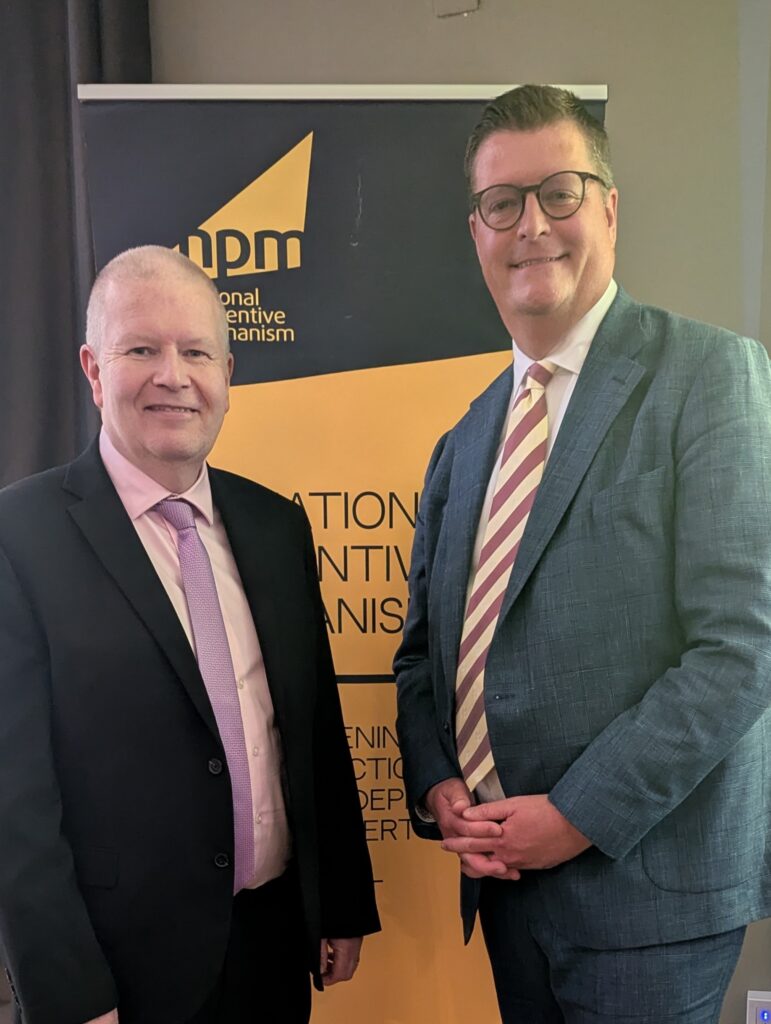
Sir Martyn Oliver, Ofsted’s Chief Inspector, highlighted the good care that secure children’s homes provide, but also raised urgent concerns about secure training centres and young offender institutions. Shaun Common (HMI, Ofsted) complemented this by explaining how risks are intensified by increasingly complex mental health needs and gaps in specialist provision, meaning some children are placed without appropriate support. He also described inconsistent separation practices alongside weak governance, limited health-professional oversight and inconsistent understanding of legal frameworks.
Together, they set out how Ofsted combines prevention with enforcement and rapid follow-up, an approach that has shifted practice on the ground and created a wider ripple effect.
Cathy Asante (Legal Officer, SHRC) shared a case study on institutionalisation of people with learning disabilities and autism. By applying a human rights measurement framework, tracking commitment, effort, and outcomes, the Commission was able to demonstrate that despite significant funding, little had changed. The resulting report, Tick Tock, prompted a new government action plan, changes to funding mechanisms, and a clearer commitment to community-based care.
RQIA’s Wendy MacGregor (Assistant Director Mental Health, Learning Disability and Prison Healthcare) described how enforcement powers helped transform a psychiatric unit where repeated recommendations had failed to deliver lasting improvement. An improvement notice set clear requirements and timelines, ultimately leading to the construction of a new, purpose-built facility and the successful resettlement of patients into the community.
Thank you to all speakers and delegates for your participation and commitment!
Read the official Conference Note
Chair Handover
This year’s conference also marked the end of Sherry Ralph’s tenure as Chair of the UK NPM. Sherry said:
Serving as Chair of the UK NPM has been a great privilege. I would like to express my sincere thanks to colleagues across the NPM for their dedication, constructive challenge, and collective commitment to strengthening the prevention of ill-treatment across places of detention. A special thanks to the NPM Secretariat Team for their incredibly hard work, care, and commitment to the work of the NPM.
As I hand over the role, I am very pleased to welcome Rachel Lindsay from Criminal Justice Inspection Northern Ireland as the new Chair. Rachel brings a strong depth of organisational knowledge, alongside the skills and experience needed to build on the NPM’s achievements and navigate the challenges ahead. I wish Rachel every success in the role and look forward to seeing the NPM continue to develop under her leadership.
Incoming Chair Rachel Lindsay formally took up position of Chair on 30 April 2026. Rachel says:
I am honoured and delighted to be appointed to the role of Chair of the UK NPM. As an Inspector at CJI, I recognise the important role that each member organisation plays in undertaking regular monitoring with the aim of preventing torture and ill-treatment in places where people are deprived of their liberty across the UK. Having been involved in inspections of places of detention across the UK, including police custody, court custody and escorting, prisons and juvenile justice I have benefited from the huge wealth of knowledge and expertise that is held within the collective of the UK NPM bodies.
As CJI’s representative to the UK NPM since its establishment, I have seen the organisation grow and develop and the benefits of cooperation when monitoring and inspection bodies work together. Across the UK, NPM bodies are visiting places of detention on a daily basis, committed to upholding the rights of those deprived of their liberty and aiming to prevent ill-treatment in places that are often hidden away from public view. The UK NPM clearly benefits from the breadth of experience, sharing of expertise and partnership working across the different jurisdictions. I hope that I can continue to build on the strong foundations that exist from previous work programmes and under the able stewardships of previous Chairs. It is an incredible responsibility to take on this role and work with the talented NPM Secretariat Team, and I am looking forward to this new challenge.
[1] Section 136 (Mental Health Act 1983) allows police to detain a person in a public place who appears to have a mental disorder and needs immediate care, taking them to a “place of safety” for assessment.